What a Lip Lift Is
The bullhorn (subnasal) lip lift removes a strip of skin just below the base of the nose, in the shape of a stretched-out horseshoe or "bullhorn" that gives the technique its name, and shortens the philtrum as a result. The lip is then advanced upwards and the deeper tissue is often anchored to the base of the nose (a "cinch" or nasal-base anchoring stitch), so more red lip becomes visible and more upper teeth show at rest — a systematic review of outcome studies confirms measurable increases in vermilion (red lip) height and incisor show following the procedure2. It is a structural change to the position of the upper lip, not a volume increase, and it is entirely distinct from procedures that add filler or fat to the lip itself. (There is no BAAPS or BAPRAS patient-information page specific to lip lift, so this overview draws on the published surgical literature rather than a single procedure-specific patient-information source.)
Other Lip Lift Variants
The subnasal bullhorn is the most established and most commonly performed approach, but a handful of modifications exist — including "Italian" and "corner" lip lift techniques that alter smaller, more localised areas rather than the full central philtrum — and deep-plane variants that anchor tissue at a different depth for a more suspended lift. A 2026 evidence-based review of lip lift techniques, focused specifically on the classical subnasal bullhorn approach and its modifications,1 found consistent, well-documented outcomes and comparatively low revision rates across the studies it examined. Because that review's evidence base centres on the bullhorn family of techniques, patients considering a less common variant should ask their surgeon directly what outcome data, if any, exists specifically for that approach, rather than assuming it carries the same evidence base.
Lip Lift vs Lip Filler
Filler and a surgical lift work in fundamentally different ways, and one cannot substitute for the other:
- Lip filler: hyaluronic-acid volume added to the lip; temporary (6–12 months); reversible with hyaluronidase3; does not change philtrum length or how much tooth shows at rest.
- Lip lift: surgery that changes the shape and position of the lip and shortens the philtrum; permanent; not reversible without further surgery.
Patients with a naturally long philtrum but adequate lip volume tend to see more change from a lift than from filler alone, since filler cannot shorten the distance between the nose and the lip. Some patients choose to combine a lift with a smaller amount of filler afterwards, once swelling has settled, for a subtly fuller result. Read more on how the two compare in Lip Lift Before & After.
Am I a Candidate?
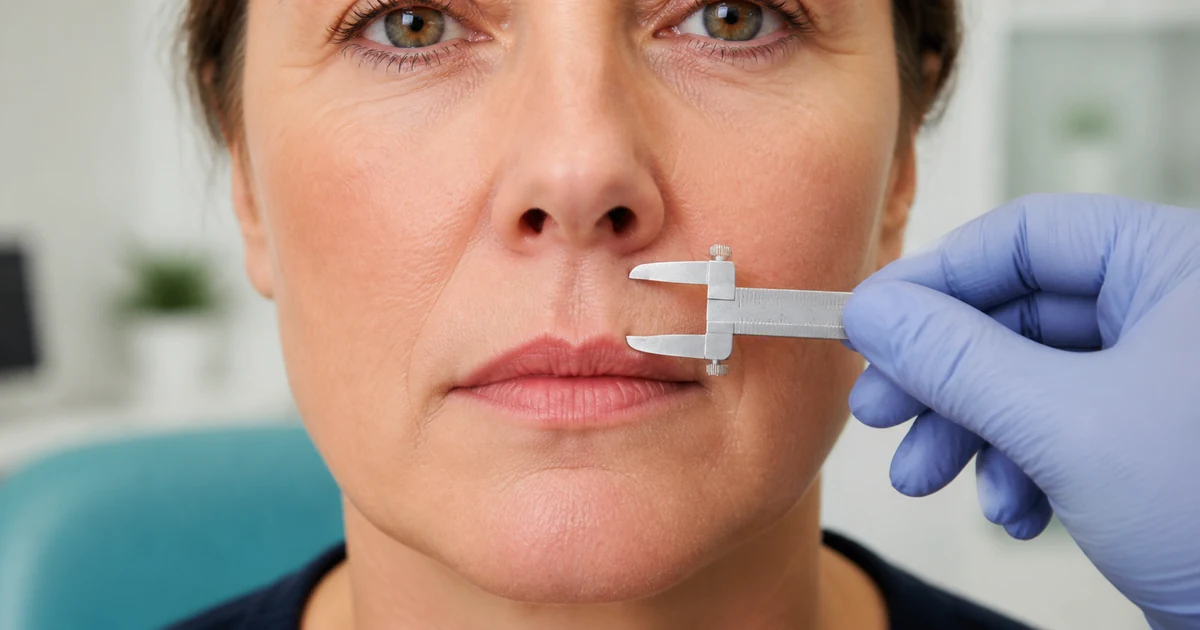
- A long philtrum — subjectively, but generally greater than about 18–20mm at rest, measured from the base of the nose to the top of the red lip.
- A thin upper lip, or one that has thinned and lost tooth show with age — ageing itself tends to lengthen the philtrum and flatten the lip.
- Non-smokers heal better and tend to get a less visible scar; smokers should expect a higher risk of poor healing and should stop for a defined period around surgery.
- Realistic expectations — this is generally a change of a few millimetres to lip show, not a full lip transformation, and its impact reads most clearly in profile and at rest, less so when smiling widely.
- No active cold sore or lip skin infection at the time of surgery.
A lip lift is not the right choice for patients whose main concern is lip volume rather than lip length or tooth show — filler, or a lip lift combined with fat grafting, may suit that goal better. A good consultation should measure your philtrum length and tooth show at rest, not simply agree with whatever change you ask for.
The Scar: Where It Sits and How It Heals
The scar follows the natural crease where the base of the nose meets the upper lip, hidden in the shadow this crease naturally casts. In most patients it fades to a hairline pale mark that others would not notice without looking closely. In some people — particularly those prone to keloid or hypertrophic scarring, and in darker skin tones where post-inflammatory pigmentation can be more noticeable — it remains more visible for longer. It is always present on close inspection; it does not disappear entirely, and no surgeon can guarantee otherwise.
The Procedure and Anaesthetic
A lip lift is usually performed under local anaesthetic, sometimes with light oral or intravenous sedation for more anxious patients, as a day case taking roughly 45 to 75 minutes. The surgeon marks the planned excision with the patient sitting upright beforehand, since lip position looks different lying flat, removes the marked strip of skin, and closes with fine sutures — often a mix of dissolvable deeper layers and fine sutures at the skin surface that are removed after about a week. See Anaesthetic Options and Safety for how local anaesthetic and sedation are typically used in procedures like this.
Recovery Timeline
- Days 1–3: swelling peaks, particularly of the upper lip itself, which can look surprisingly full compared with the eventual result; bruising around the nose base and lip is common.
- Days 5–8: external sutures, where used, are typically removed; most of the peak swelling has begun to settle.
- Week 1–2: most patients are back at work and socially comfortable, once swelling has settled enough that the result looks proportionate rather than overfilled.
- 6–12 weeks: residual, subtler swelling resolves and the final lip shape and scar colour settle further.
- 6–12 months: the scar itself continues to mature and fade, in line with normal scar maturation timelines.
Numbness or altered sensation of the upper lip and philtrum area is common in the first weeks and usually improves over 3–6 months as small sensory nerves recover; permanent alteration is uncommon. Strenuous exercise and activities risking a direct blow to the area are usually restricted for around two weeks.
Risks and Over-Correction
A 2026 evidence-based systematic review of lip lift outcomes across seven studies and 1,754 patients1 found that complications were predominantly mild and transient, with revision rates ranging from under 1% to around 7% depending on technique and how conservatively the initial excision was planned. Over-correction — removing too much skin — leaves too little distance between the nose and lip, exposing too much upper tooth at rest and giving an unnatural "teeth-out" or startled look; because the removed skin cannot be replaced, this is the harder of the two failure modes to correct and the one surgeons are usually most cautious to avoid. Under-correction is comparatively easy to revise with a small secondary excision once fully healed, but gives an underwhelming result the first time round. Both are common regret points, which is why reviewing a surgeon's own case examples at 6–12 months — not day-14 photos — matters more for this procedure than most. Other documented risks include visible or thickened scarring, asymmetry between the two sides, and, rarely, more persistent numbness.
Longevity
The result is permanent: the skin strip removed does not regrow, and the shortened philtrum length is a lasting structural change. The face continues to age around it in the usual way — further natural thinning of the lip and loss of surrounding facial volume can still occur over subsequent decades — but the lip lift itself does not reverse or relapse the way some soft-tissue procedures can.
Cost in the UK
Typical UK private cost is £2,800–£4,500. A fair, itemised quote should separately state the surgeon's fee, the facility fee, and the number of included follow-up visits, particularly the suture-removal appointment. See the master UK cosmetic surgery cost table for how this compares with other procedures. It is not funded on the NHS for cosmetic reasons.
Frequently Asked Questions
Does a lip lift leave a visible scar?
Yes — usually a hairline pale mark at the base of the nose, following the natural crease where the nose meets the lip. Most people don't notice it in normal light or from a conversational distance, but it is always present on close inspection and never disappears entirely.
Should I get a lip lift or lip filler?
They solve different problems. Filler adds volume to the lip temporarily and is reversible. A lip lift changes the position of the lip and the length of the philtrum permanently. Patients with a long philtrum but adequate lip volume often see more change from a lift; some combine both.
Is a lip lift permanent?
Yes. Unlike filler, a lip lift removes a strip of skin and repositions the lip structurally, so the change does not reverse itself over time. The face continues to age afterwards, but the shortened philtrum length is a lasting change.
How much does a lip lift cost in the UK?
Private lip lift surgery in the UK typically costs £2,800–£4,500, usually performed under local anaesthetic as a day case. The exact price depends on the surgeon's experience, the facility, and whether it's combined with another facial procedure in the same session.
What's the biggest risk of a lip lift?
Over-correction — removing too much skin — is the most commonly reported regret, since it exposes excess upper tooth at rest and is hard to fully reverse. Under-correction, visible scarring, and temporary numbness of the upper lip are the other main risks to discuss beforehand.