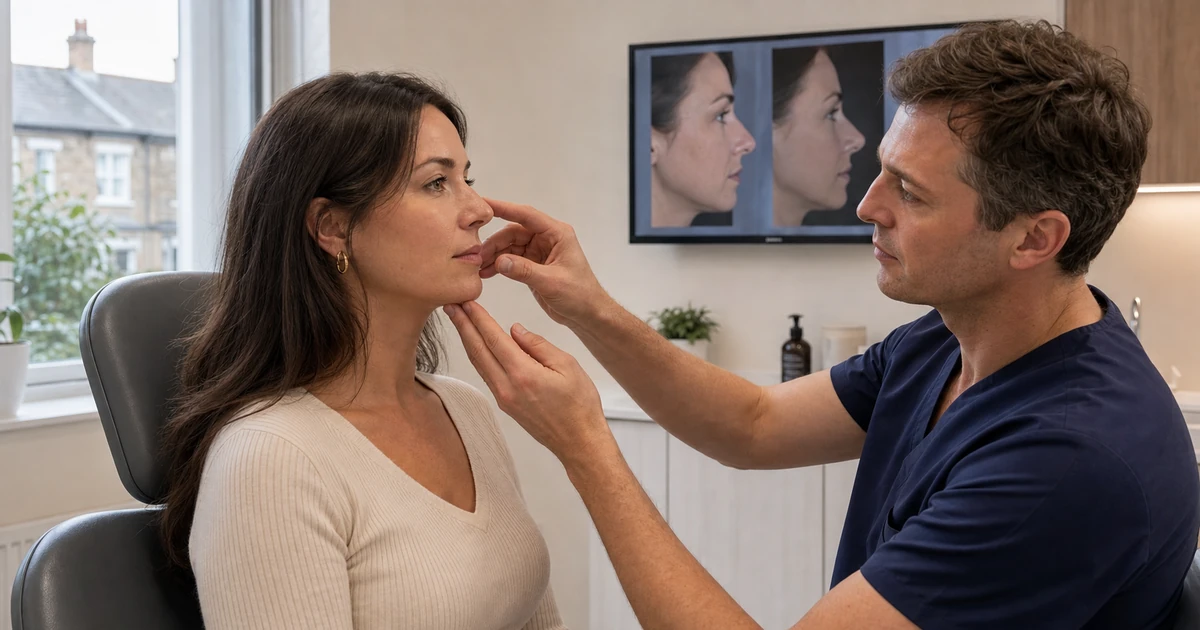
Why Revision Is Sometimes Needed
Across procedure types, revision surgery is generally considered for reasons that fall into a few recurring categories:
- Aesthetic dissatisfaction. The result doesn't match what was discussed or expected, even without any medical complication.
- Asymmetry. Natural healing rarely produces perfect symmetry; sometimes the degree of asymmetry is more than the patient or surgeon anticipated.
- Complication-driven revision. A complication such as a haematoma, infection or implant issue (see Risks & Complications) can itself require corrective surgery.
- Healing irregularity. Scar tissue that forms unevenly, or tissue that settles differently than expected, can prompt a revision conversation.
- Device or implant issues. For breast implants specifically, rupture, capsular contracture, or wanting a different size or type years later are common, separate reasons for revision — distinct from BIA-ALCL, which is investigated rather than routinely revised for; see Breast Implant Illness & BIA-ALCL.
It's worth distinguishing these categories clearly with your surgeon, since they affect both the technical approach and, as covered below, who is likely to pay.
Why Surgeons Require a Minimum Wait
Tissue does not finish changing on the operating table — it continues to remodel and settle for months afterwards. This is why most surgeons decline to even discuss revision until a minimum period has passed, typically at least 6 to 12 months depending on the original procedure. Facial procedures may settle within the shorter end of that range; nasal tip tissue, for example, can continue changing for up to a year, which is why revision rhinoplasty timelines sit toward the longer end. Rushing a revision before healing is complete risks operating on tissue that would have improved on its own, and can mean paying twice for a problem time alone might have resolved.
An exception applies to genuine early complications — an infection, a haematoma, or an implant problem causing ongoing symptoms is assessed and treated on its own clinical timeline, not held to the same 6–12 month rule that applies to purely aesthetic revision requests.
Why Revision Is Technically Harder Than Primary Surgery
Across procedure types, revision surgery is generally more demanding than the original operation, for a consistent set of reasons:
- Scar tissue. Previous surgery leaves fibrous scar tissue that is harder to work through cleanly than untouched tissue, and can obscure normal anatomical landmarks.
- Altered vascular supply. Blood supply to the area may have been changed by the first operation, affecting healing and the surgical options available.
- Tissue depletion. Some procedures use a patient's own tissue (cartilage, skin, fat) as donor material; a first operation may have used the most accessible supply, leaving less for a second — a particular consideration in revision rhinoplasty, where septal cartilage is often already used.
- Distorted anatomy. Where the first result itself changed the underlying anatomy — an over-resected structure, for instance — the surgeon may be planning around a more limited starting point than the original, unoperated anatomy offered.
These factors together are why operating times for revision cases often run longer than the original procedure, and why some surgeons decline revision cases outside their own primary caseload altogether.
The Honest Limit — Not Everything Can Be Fully Corrected
A responsible surgeon will be candid that revision surgery has limits. Some outcomes can be substantially improved but not fully reversed; some combinations of scar tissue and altered anatomy set a ceiling on what a second operation can achieve. Realistic expectations are as important going into a revision as they were going into the original procedure — arguably more so, given the added technical difficulty, a theme echoed generally in NHS.uk's overview of cosmetic procedures1. GMC guidance for doctors offering cosmetic interventions is explicit that patients' expectations about outcomes must be realistic before any procedure goes ahead3 — a standard that applies just as much to a revision consultation as to a first one.
Rhinoplasty-Specific Revision: A Dedicated Guide
This page covers revision surgery in general, across procedure types. Rhinoplasty has its own detailed revision guide, covering timing, difficulty and UK cost specifics: read Revision Rhinoplasty in the UK.
Revision Costs Are Typically Higher — and Often Not Pre-Covered
Because revision surgery takes longer, requires more surgical skill, and often involves a more complex plan than the original procedure, it typically costs more than primary surgery. For procedure-specific figures, see Cosmetic Surgery Costs in the UK. Critically, most original quotes do not automatically include the cost of a future revision — a revision is, in cost terms, usually a new procedure unless a specific written policy says otherwise.
What actually determines who pays generally comes down to the reason for the revision:
- Complication-driven revision. Where a genuine surgical complication is directly responsible, some clinics cover some or all of the corrective surgery under their complication-management policy — but this varies enormously between providers and is not a legal entitlement in the way NHS care can be.
- Dissatisfaction-driven revision. Where there's no medical complication and the issue is purely aesthetic, patients typically pay the full cost of a revision, even at the original clinic.
- Time-limited revision policies. Some UK clinics offer a defined window — for example, a reduced-fee or fee-free minor revision within 12 months for specific issues — but the details (what's covered, what isn't, and for how long) vary by clinic and are set out, or should be, in writing before your first procedure.
GMC guidance for doctors offering cosmetic interventions is clear that financial and commercial interests must not be allowed to adversely affect standards of patient care3 — which is one reason a reputable clinic will discuss its revision policy honestly at the outset rather than only once a problem arises. Ask for the revision policy in writing before you book, not as a verbal reassurance during the sales conversation, and read Cosmetic Surgery Costs in the UK for what a complete, comparable quote should include.
Choosing a Revision-Experienced Surgeon
Revision surgery is a different skill set from primary surgery. When researching a surgeon for a revision, it's reasonable to ask directly about their specific experience with revision cases in your procedure, not just their general caseload, and whether they hold RCS England's voluntary cosmetic surgery certification2 for the relevant procedure.
It's also entirely reasonable to seek a second opinion from a different surgeon before committing to a revision, particularly where the first surgeon is the one proposing to correct their own result — an independent assessment can confirm whether the plan on the table is the right one, or whether a different technique or a longer wait is more appropriate. See Questions to Ask at a Cosmetic Surgery Consultation for the full list of questions worth asking, including how a surgeon manages complications and their written revision policy, and How to Check the GMC Register to verify a new surgeon's credentials before a second opinion appointment.
FAQ
How long should I wait before considering revision surgery?
Most surgeons recommend waiting at least 6 to 12 months, depending on the original procedure, because tissue continues to remodel and settle during that time. Nasal tip tissue, for example, can keep changing for up to a year, which is why rhinoplasty revision timelines sit at the longer end of this range.
Why is revision surgery harder than the original operation?
Scar tissue, an altered vascular (blood) supply, and depleted donor tissue in some procedures all make revision technically more demanding than primary surgery. This is why genuine revision experience, not just general caseload, is worth asking a surgeon about directly.
Does revision surgery cost more than the original procedure?
Typically yes, because revision surgery is more complex, takes longer, and often needs more senior surgical input. Whether your original surgeon contributes to the cost depends entirely on their specific written revision policy agreed before your first operation — not on general custom or goodwill.
Will my original surgeon's quote have included the cost of a possible revision?
Usually not automatically. Some UK clinics offer a limited revision policy covering a defined period or specific complications; many do not cover dissatisfaction-driven revisions at all. Always ask for the written revision policy, not a verbal assurance, before booking your original surgery.