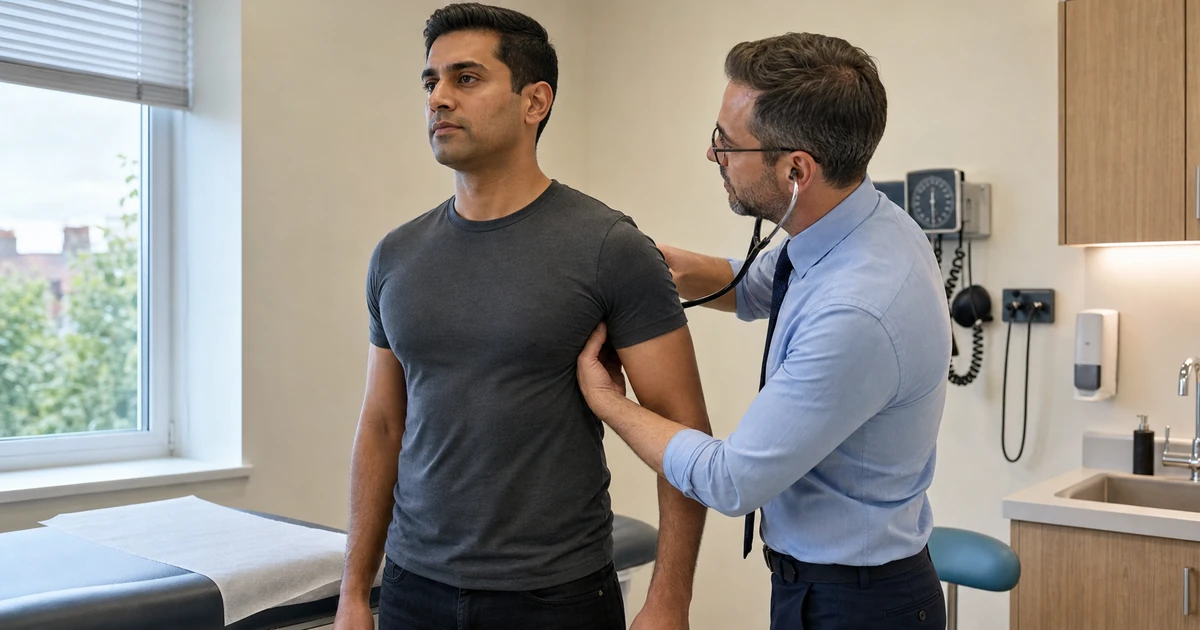
First: Get the Cause Investigated
Gynaecomastia can have a number of underlying causes — hormonal imbalance, certain medications, liver or kidney conditions, or, rarely, a tumour. Because of this, the NHS approach always starts with your GP investigating, and where necessary treating, any underlying cause first — surgery is never the first response to enlarged breast tissue in men. This typically involves:
- A history of when the change started, weight change, medication use, and any relevant symptoms.
- Physical examination and, where indicated, blood tests to check hormone levels and liver/kidney function.
- Reviewing any medications that might be contributing — some blood pressure treatments, some anti-ulcer medicines, and anabolic steroid or recreational drug use are recognised contributors — and adjusting these where clinically appropriate.
- Referral to an endocrinologist if a hormonal cause is suspected and needs specialist investigation.
In many cases, treating the underlying cause resolves or reduces the condition without surgery being needed at all. Surgery is only considered once this investigation has taken place and any treatable cause has been addressed — skipping straight to a surgical discussion, without this step, is not how the NHS route works.
It's also worth confirming, before your GP appointment if you can, whether what you're describing is genuine glandular gynaecomastia or fat deposited over the chest (sometimes called pseudogynecomastia) — the two can look similar but respond very differently to weight loss, and your GP's examination will usually address this directly. See Gynaecomastia or Chest Fat? for how the distinction is made and why it matters for treatment.
When Surgery May, Rarely, Be Funded
Where no reversible cause is found, or the condition has persisted for a long period despite treatment, an ICB may — rarely — consider funding surgery. The surgical options themselves — typically liposuction, direct excision of glandular tissue, or a combination of the two depending on presentation — are the same techniques used in private gynaecomastia surgery, as outlined in the British Association of Aesthetic Plastic Surgeons' male chest reduction (gynaecomastia) patient information2. Factors that can support an NHS funding case include:
- Severity and persistence of the condition, documented over time rather than reported at a single appointment.
- Significant physical symptoms (such as pain, skin irritation or discomfort during exercise) rather than appearance concerns alone.
- Documented psychological impact — assessed by a clinician, not self-reported alone.
As with all NHS cosmetic-adjacent procedures, there is no automatic yes and no single national threshold — policy is set locally by each ICB and can differ significantly by region, so two men with a similar degree and duration of gynaecomastia can receive different funding decisions.
There's no fixed national definition of how long "persistent" needs to mean in practice, but local policies commonly expect the condition to have been present, and unresponsive to any treatable underlying cause, for a period measured in years rather than months before a funding request is even considered — reflecting the fact that some gynaecomastia, particularly in younger men, does still settle over a longer timescale than people expect. Your GP or the specialist you're referred to can tell you what your specific ICB's policy expects in terms of documented duration.
Why Most Cases Are Considered Cosmetic
NHS.uk's general guidance on cosmetic procedures1 treats gynaecomastia surgery (breast reduction surgery in men) as a cosmetic procedure that is not routinely available on the NHS. The reasoning is that, once a serious underlying medical cause has been ruled out or treated, enlarged male breast tissue on its own — without significant physical symptoms or documented psychological harm — is an appearance concern rather than a medical condition requiring surgical correction. That's a difficult distinction for many men to hear, particularly where the condition affects confidence and clothing choices considerably, but it's why the great majority of gynaecomastia referrals are assessed, and declined, as cosmetic rather than clinically necessary.
This is not a judgement that the psychological impact is unimportant — GPs and ICBs generally accept that gynaecomastia can affect confidence, relationships and mental health significantly. It's a judgement about where the NHS draws the line on funding appearance-related treatment generally: the same threshold that keeps most breast augmentation, most facial cosmetic surgery and most body-contouring procedures out of routine NHS commissioning applies here too. Where the psychological impact is severe and well documented — ideally with input from a GP or mental health professional over time, rather than a single self-report — that evidence is exactly what a funding case, or an Individual Funding Request, needs to be built on.
Adolescent Cases: Watchful Waiting
Gynaecomastia is common during puberty, caused by normal hormonal changes as testosterone and oestrogen levels fluctuate. As NHS.uk's condition page on gynaecomastia3 explains, when gynaecomastia happens during puberty it usually goes away by itself over time as hormone levels settle. For this reason, the standard NHS approach for adolescent gynaecomastia is watchful waiting rather than early surgical referral — your GP will usually want to monitor the condition over a reasonable period, rule out other causes, and address the psychological impact of the visible change directly (including with a school or a mental health referral where teasing or low mood is significant), before surgery is considered at all. Persistent adolescent gynaecomastia that hasn't resolved after a genuinely extended period is assessed on the same rare, exceptional-circumstances basis described above — puberty alone is not a reason to bypass that process.
Starting the Process: Your GP
- Be ready to discuss when the change started and how it has progressed.
- Mention any medications, supplements, or recreational drug use that could be relevant.
- Describe any physical symptoms (pain, tenderness) as well as any psychological impact.
- Expect investigation of an underlying cause before any discussion of surgery, and — for teenagers — expect a period of monitoring before anything further is considered.
Outside Standard Policy: The IFR Route
If your case falls outside standard local policy but you and your clinician believe there are exceptional circumstances, the mechanism is an Individual Funding Request (IFR). It is submitted by your clinician on your behalf and requires a case for clinical exceptionality — that your circumstances are materially different from the general population the policy is designed for. Read Individual Funding Requests for the full process, including what evidence is typically needed and how long a decision can take.
Going Private: Cost
Because NHS funding is rare, most patients who want gynaecomastia surgery end up paying privately. Typical UK private cost is £4,500–£7,500, varying by whether the case is liposuction-only, glandular excision, or a combination of the two — combined cases at the top end of the range tend to involve more glandular tissue, a longer procedure and, often, general rather than local anaesthesia. What to expect from a private consultation onward — including realistic recovery timelines — is covered in the gynaecomastia procedure guide. A written quote should separate the surgeon's fee, anaesthetist's fee, facility fee, compression garment, and named follow-up appointments — see the Gynaecomastia cost guide for the full breakdown of what should and shouldn't be included, and how the surgery works for technique and recovery. If you'd rather spread the cost, see Cosmetic Surgery Finance for how UK patients typically pay for private treatment.
FAQ
Can I get gynaecomastia surgery on the NHS?
Rarely. The NHS always investigates whether there's an underlying medical or hormonal cause first, rather than offering surgery as a first response. Surgery may occasionally be funded for severe, persistent cases with significant physical or documented psychological impact, subject to your local ICB's policy and available evidence.
Should I see my GP first?
Yes, always. The standard NHS route is GP investigation of a possible underlying cause — hormonal, medication-related, liver or kidney related, or otherwise — before surgery is ever discussed. This applies whether you're hoping for NHS funding or simply want to rule out a treatable cause before paying privately.
Will it go away on its own?
Often, yes, if it started during puberty — the NHS approach for teenagers is usually watchful waiting, since it commonly resolves by itself as hormone levels settle over time. Gynaecomastia that persists well beyond puberty, or starts later in adult life, is less likely to resolve without treatment.
What if no cause is found and I still want surgery?
Your GP can discuss whether your case might meet local ICB criteria for rare funding, based on severity, persistence and impact, or refer you for an Individual Funding Request in exceptional circumstances. Many patients in this position ultimately choose to go private instead — typical UK cost is £4,500–£7,500.