Why Otoplasty Is Different
As NHS.uk's page on ear correction surgery (otoplasty)1 puts it, ear correction surgery "may be available on the NHS, particularly for children who need it" — a threshold that makes otoplasty unusual among cosmetic-adjacent procedures, since childhood referrals are considered more often than for adults. In practice, that reflects prominent ears in children leading to significant, documented psychosocial harm — teasing, bullying, low self-esteem — rather than the appearance itself being judged a medical problem in isolation.
This puts otoplasty in a genuinely unusual position among the procedures covered on this site. Almost everything else in cosmetic and cosmetic-adjacent surgery is either never funded (purely aesthetic requests) or funded only where there's a clear physical or functional impairment — obstructed vision, a breathing problem, chronic physical symptoms. Prominent ears cause none of those things physically, yet a childhood referral can still succeed, because the harm being addressed is the documented psychological and social impact of a visible difference during childhood, at an age where that impact can be considerable and where surgery has a good track record of resolving it. That's a distinct rationale from most of the rest of NHS cosmetic-adjacent policy, and it's worth understanding clearly before you approach your GP.
When the NHS May Fund Ear Surgery
NHS.uk1 notes that, for adults, surgery is only ever considered where prominent ears are "causing them significant distress." Applied to children, funding is likewise not based on parental preference or on ears simply being noticeably prominent — in practice, what ICBs and clinicians typically look for includes:
- Documented evidence of teasing, bullying or distress attributable to the ears' appearance.
- An impact on the child's confidence, social participation or mental wellbeing, ideally recorded by a GP, school, or other professional over time rather than reported once.
- The degree of ear prominence itself, though this is assessed alongside — not instead of — the psychosocial evidence above.
As with other cosmetic-adjacent NHS pathways, there is no automatic entitlement and no single national threshold: each ICB sets and applies its own local policy, so the same degree of prominence and the same history of teasing can lead to different outcomes depending on where a family lives.
The Child's Own Wishes Matter
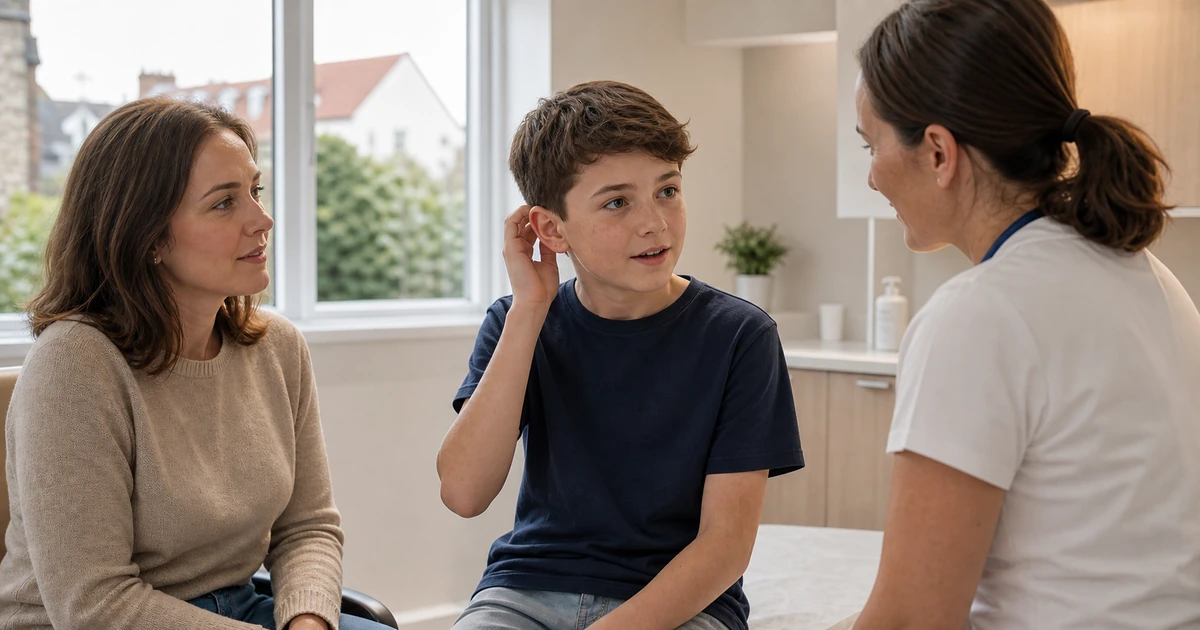
This is the point families most often underestimate. A parent's concern about their child's ears — however genuine and well-intentioned — is not, on its own, grounds for surgery. The GMC's ethical guidance for doctors on treating 0–18 year-olds3 sets out that assessing a child's best interests means actively exploring what matters to the child themselves, not just their parents. In practice this means a clinician assessing an otoplasty referral will want to hear, in the child's own words wherever their age and understanding allow it, whether they themselves feel bothered by their ears and whether they themselves want surgery — not simply confirm that a parent has requested it.
Where a child is too young to give a meaningful view, or is ambivalent or reluctant despite parental enthusiasm, that is a reason for caution rather than for proceeding regardless. This isn't a bureaucratic hurdle; it reflects a genuine clinical and ethical principle that a child should be a willing participant in a decision about their own body wherever that's achievable, rather than a passive subject of someone else's decision on their behalf.
Best Age for the Procedure
Ear cartilage growth is largely complete by around age five, which is why otoplasty can be technically performed from that age using the pinning or scoring techniques described in patient information from the British Association of Aesthetic Plastic Surgeons2. In practice, however, funding assessment also weighs psychosocial readiness — whether the child is old enough to articulate their own distress and wish for surgery, and whether the teasing or impact is established rather than anticipated. For many families this means the point at which a referral is realistically supported is a few years later than the age at which it becomes technically possible, once a child is old enough to attend school regularly, form their own view, and describe how the teasing or self-consciousness actually affects them day to day.
GP Referral and Assessment
- Keep a record of specific incidents of teasing or bullying, with approximate dates.
- Note any impact on school attendance, participation in activities (swimming, sport), or mood.
- Be ready to discuss, with the GP, how your child themselves feels about their ears and about surgery — this will be asked directly as the child gets older.
- The GP can refer to paediatric or plastic surgery services for a full assessment where criteria appear to be met; the specialist assessment will usually revisit both the psychosocial evidence and the child's own view in more depth than a single GP appointment allows.
If Refused: Private Options and Cost
For adults, prominent ears are treated by the NHS as a cosmetic concern, in the same way as most other appearance-driven requests — the childhood psychosocial-harm rationale that supports some paediatric referrals does not carry over, and adult otoplasty is, in practice, essentially always a private procedure.
Where a child's case is refused, or falls outside standard local policy but there is a strong argument for exceptional circumstances, the mechanism is an Individual Funding Request (IFR), submitted by the treating clinician on the family's behalf rather than by a parent directly. Read Individual Funding Requests for how the process, evidence requirements and appeal route work. Many families — adults and refused paediatric cases alike — choose to go privately rather than pursue an IFR or wait for a policy change. Typical UK private cost is £3,000–£5,500, broadly similar for children and adults, though children are more often operated on under general anaesthetic while adults sometimes have the option of local anaesthetic with sedation. See the Otoplasty cost guide for what a written quote should include.
What the Surgery Involves & Recovery
Otoplasty pins prominent ears closer to the head and, where needed, reshapes or defines a poorly formed antihelix — the inner fold of cartilage. The operation resets the cartilage with internal sutures, and scars sit behind the ear, hidden in the natural crease. Cartilage has some "memory", so a degree of relapse toward the original position, or mild asymmetry between the two ears, is a recognised possibility with any technique — realistic outcome photos are usually shown at six to twelve months rather than immediately after surgery.
Recovery typically involves a protective headband worn day and night for about a week, then at night only for a further four to six weeks while the new position settles. Most children and adults return to school or work around a week after surgery, once initial swelling and bruising have eased, though contact sports and activities carrying a risk of a direct blow to the ear are usually restricted for longer. Risks are generally low but include bruising and swelling, temporary discomfort, mild asymmetry, infection or suture-related irritation, and — as above — a degree of relapse toward the original ear shape over time. See how otoplasty is performed for the full procedure and recovery guide, including anaesthetic options and a more detailed risk list.
FAQ
Is ear surgery free for children on the NHS?
It can be, where there is documented psychosocial impact — teasing, distress, effect on confidence — and where your child themselves understands and wants the surgery. It is not funded on appearance or parental preference alone, and depends on local ICB policy.
Does my child need to agree to the surgery themselves?
Yes — UK ethical guidance places real weight on a child's own understanding and wish once they are old enough to express it. Clinicians will usually want to hear this directly from the child themselves. Surgery driven only by a parent's concern about appearance, without the child's own wish, is not supported.
What age is best for otoplasty?
Ear growth is largely complete from around age five, which is when surgery becomes technically possible. NHS funding assessment also considers psychosocial readiness, though, which often means referrals for documented teasing or distress are realistically supported a few years later than that, once a child can express their own view.
What if we're refused?
Your clinician can consider submitting an Individual Funding Request if there are genuinely exceptional circumstances, though this isn't guaranteed to succeed. Otherwise, most refused cases and adult requests are pursued privately instead — typical UK cost is £3,000–£5,500 for the surgery itself, similar for children and adults.
Can adults get otoplasty on the NHS?
Essentially never. For adults, prominent ears are treated by the NHS as a cosmetic matter in the same way as most other appearance-driven requests — the childhood psychosocial-harm rationale that supports some paediatric referrals does not carry over, so adult otoplasty is, in practice, always a private procedure.