What Changes Immediately
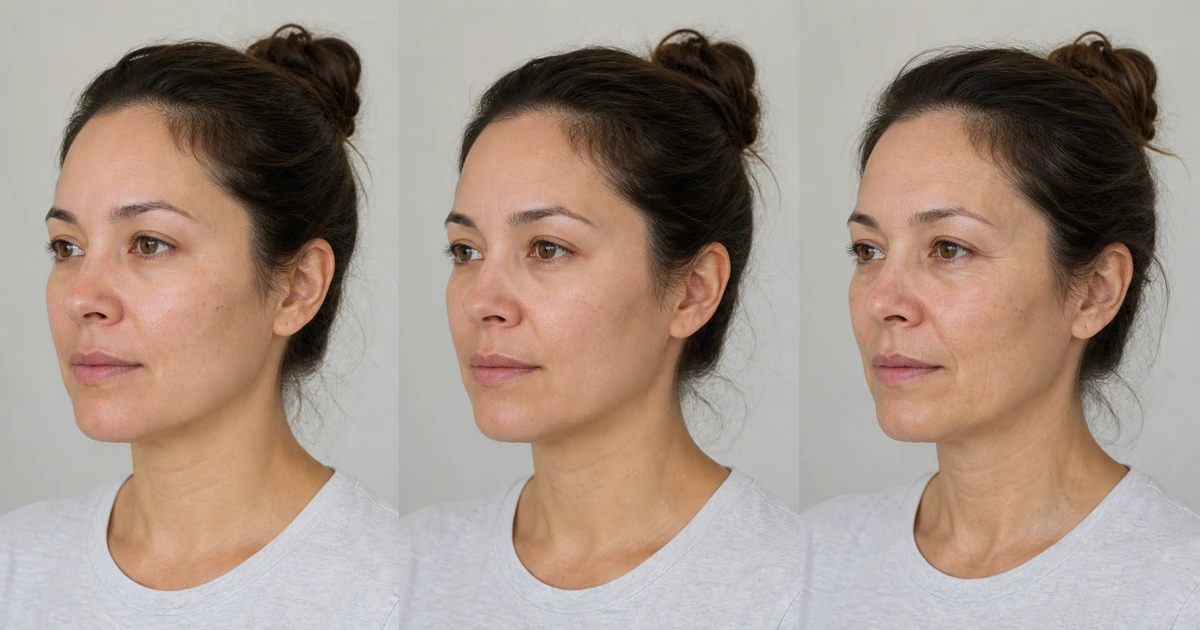
Once post-operative swelling has fully resolved, the lower cheek sits thinner and the mid-face contour reads more angular, with a subtly more defined line running from cheekbone to jaw. The buccal fat pad occupies a specific pocket of the mid and lower cheek, so the visible effect is concentrated there — it does not touch the upper cheekbone, the jawline itself, or the lower face's skin and muscle structure. The change tends to be more visually striking in a face that already carries relatively little fat elsewhere, simply because there's less surrounding volume to compete with the new contour — but that same starting point is exactly what makes the long-term question, addressed below, more relevant for slimmer faces than fuller ones.
Why Early Photos Overstate the Change
Photographs taken two to six weeks after surgery are taken during the window when post-operative swelling is still settling, and swelling inside the mouth and cheek tissue behaves unpredictably in this period. Paradoxically, some patients look temporarily puffier in weeks two to four than they did before surgery, before the actual volume reduction becomes visible from around two to three months onward as the deep swelling clears. A photo at eight weeks is not a reliable preview of the final result; a photo at six months is much closer to it, and most surgeons ask patients to wait at least that long before judging the outcome or discussing any dissatisfaction.
How to Read Result Photos Critically
Whether you're looking at a friend's photos, a clinic's marketing material, or your own progress shots, the same five variables distort what you're seeing more than the surgery itself does:
- Angle: a chin-tucked-down photo makes any face look wider and fuller through the lower cheek; a chin-up angle does the opposite, exaggerating slimness.
- Lighting: flat, frontal lighting flattens and hides contour; light angled down from above emphasises shadow under the cheekbone and can make a untreated face look more sculpted than it is.
- Makeup: contour makeup applied along the natural buccal hollow can make an untreated face look surgically altered in a photo, and its absence in a "before" shot can do the reverse.
- Expression: smiling redistributes mid-face volume and can either soften or exaggerate the visible effect compared with a neutral expression.
- Digital editing and concurrent weight change: if a before/after pair also spans a period of weight loss, or has been retouched, buccal fat removal is not the only variable explaining the difference — treat any single dramatic comparison with proportionate scepticism.
Is It Permanent?
The Fat Pad Doesn't Grow Back
The buccal fat pad is a discrete anatomical structure, sitting deep to the cheek muscles, and is generally considered permanent because the fat cells removed do not return. A clinical review of buccal fat pad excision for cheek refinement1 reports a favourable short-term aesthetic outcome and low complication rate across the small number of studies available, but it also flags a genuine lack of long-term follow-up data — the review covers only four studies and 134 procedures in total, so it doesn't directly establish permanence over decades, only that the pad itself is anatomically discrete rather than a diffuse fat layer that regrows the way subcutaneous fat elsewhere on the body can with weight gain.
Does Weight Gain Bring It Back?
Weight gain after buccal fat removal adds subcutaneous fat to the cheek area, sitting over the muscle plane rather than in the deep pad that was removed. This can partially refill visible fullness in the cheek and soften the contour — which is why some patients mistakenly believe the effect has "come back" — but the anatomical structure itself has not returned, and the distribution of that new fat is different from the pad's original position.
How It Ages: The 10-Year Question
Natural Facial Volume Loss With Age
A peer-reviewed analysis of facial fat compartment ageing in Plastic and Reconstructive Surgery2 documents gradual, predictable change in facial fat compartments with age — but this ageing is not uniform across the face: some compartments deflate over time while others can enlarge or descend, and different areas of the face age at different rates and in different directions. This process happens to everyone, buccal fat removal or not, and the buccal compartment is one of several involved. The practical consequence is straightforward: a patient who enters that natural age-related change having already had part of the buccal pad removed starts from a lower baseline in that specific compartment than someone who has not, so any natural volume loss affecting that area may become visible sooner or more noticeably in the lower cheek.
Why Surgeons Are Cautious With Young, Thin Patients
Reputable UK surgeons frequently decline to operate on younger and already-slim patients specifically because of this trajectory — a face with little buccal fat and little fat elsewhere to begin with has the least capacity to absorb further volume loss over the following decades. The procedure's popularity on social media, often driven by a specific aesthetic trend, does not change the underlying facial anatomy or how it will age, and a surgeon willing to decline this group is generally showing better judgement, not being unhelpfully cautious.
What the Evidence Shows vs What's Speculation
Long-term outcome studies — twenty years or more — specific to cosmetic buccal fat removal are genuinely sparse in the surgical literature, largely because the procedure's popularity as an aesthetic trend is relatively recent. Statements warning that a patient will "look gaunt at 45" are informed extrapolation from what's known about natural facial ageing combined with the anatomy of the removed pad, not findings from a dedicated long-term clinical trial. This is a case where honesty about the limits of the evidence matters more than false certainty in either direction — discuss it candidly with your surgeon rather than accepting a confident answer that the literature doesn't yet fully support.
Who Tends to Age Well After It
Not every patient faces the same long-term trade-off. Surgeons generally consider these factors the most reassuring combination:
- Patients who started with genuinely full, rounded lower cheeks — not a baseline-slim face seeking further narrowing.
- Stable body weight maintained over the years following surgery, rather than significant fluctuation.
- Good skin quality and elasticity appropriate to age, which helps the mid-face contour age gracefully rather than looking hollow.
- A conservative amount removed at the time of surgery — surgeons generally agree it is easier to remove a little more later than to correct over-resection.
Risks & What "Gone Wrong" Means
As with any facial surgical procedure, general surgical risks — bleeding, infection, an adverse anaesthetic reaction — apply, though no BAAPS-specific patient guide exists for buccal fat removal at the time of writing. Buccal fat removal also carries its own specific set of risks worth discussing directly with your surgeon before consenting:
- Asymmetry from unequal removal between the two sides — one of the more common cosmetic complaints after this procedure.
- Over-resection, producing a gaunt or prematurely hollow appearance — this is the single hardest complication to correct, since the tissue cannot simply be put back.
- Buccal branch of the facial nerve injury — rare, but can affect smile symmetry, sometimes permanently.
- Salivary duct injury — Stensen's duct runs close to the surgical field.
- Infection or haematoma inside the mouth, though both are uncommon with proper technique and aftercare.
If You Regret It: Fat Transfer and Its Limits
If a patient later regrets the degree of change, fat transfer (autologous fat grafting, taken from elsewhere on the body) can add subcutaneous volume back into the mid-face. It does not, however, recreate the deep, anatomically discrete buccal pad that was removed — the added fat sits in a different tissue plane. The realistic expectation is some contour softening and volume improvement, not a full reversal to the pre-surgery appearance.
Alternatives to Consider First
Because the change is irreversible, it's worth exhausting reversible options first: achieving and maintaining a stable, healthy weight (some perceived cheek fullness resolves with weight loss alone, without surgery), contouring makeup for a temporary and fully reversible slimming effect, and — where the underlying goal is a more angular lower face rather than cheek reduction specifically — a jawline evaluation, which may address the actual aesthetic concern more precisely than removing buccal fat.
Cost in the UK
Typical UK private cost for buccal fat removal is £2,500–£4,500, covering the surgeon, anaesthetist and facility fees for a single session. As a general principle set out in NHS.uk's advice on cosmetic procedures3, cosmetic procedures sought for appearance rather than clinical need are not routinely funded on the NHS, and buccal fat removal falls into that category. See the full cost breakdown, including what a fair quote should include, in Buccal Fat Removal Cost in the UK.
FAQ
Is buccal fat removal permanent?
Yes. The buccal fat pad is a discrete anatomical structure, and once part of it is surgically removed it does not regenerate. This is different from subcutaneous fat elsewhere on the body, which can still expand again with weight gain.
Will it make me look older later?
Faces lose volume naturally with age, and starting from a reduced buccal fat pad lowers your baseline going into that process. Whether it becomes visibly gaunt depends on your starting face shape, weight stability over time and how conservatively the surgery was performed.
Can buccal fat come back with weight gain?
Not the removed pad itself. Weight gain adds subcutaneous fat over the muscle in the cheek, which can partially refill visible fullness and soften the contour, but it sits in a different tissue plane from the deep pad that was surgically removed.
Can it be reversed?
Not fully. Fat transfer can add subcutaneous volume back into the mid-face and soften the contour, but it cannot recreate the original deep buccal pad. Realistic expectations are partial improvement, not a full reversal to how you looked before surgery.
What age is too young for it?
Most reputable UK surgeons prefer patients in their late twenties or older, at a stable and healthy weight, because facial maturation continues into the mid-twenties and younger, slimmer faces have the least capacity to absorb future natural volume loss.